

F1 Long Break Explained: When Is The Next Race?
The 2026 Formula 1 season has hit an unexpected pause just three races into the campaign. The F1 break comes at a time when the sport has entered a new regulation era and expanded its grid.
This season features 11 teams and 22 drivers, with Cadillac joining the grid and Audi taking over Sauber.
However, the calendar has been disrupted early.
Why is there a long break in F1?
The gap in the Formula 1 2026 season is due to the cancellation of two races.
The Bahrain Grand Prix (April 12) and the Saudi Arabian Grand Prix (April 19) were both called off due to the ongoing war in Iran. The situation in the region was considered unsafe for travel and racing.
The decision was confirmed on March 14, nearly a month before the Bahrain race. The timing was influenced by logistics, including freight deadlines for teams.
Sources indicated that cancelling Bahrain was straightforward, while the Saudi Arabia decision required more consideration.
As a result, the calendar has been reduced from 24 races to 22 races this season.
When is the next Formula 1 race?
The next race in the Formula 1 2026 season is the Miami Grand Prix, scheduled from May 1 to May 3.
The race will take place around the Miami Dolphins’ stadium. It will also be a sprint weekend.
There is now a five-week (35-day) gap between races following the Japanese Grand Prix.
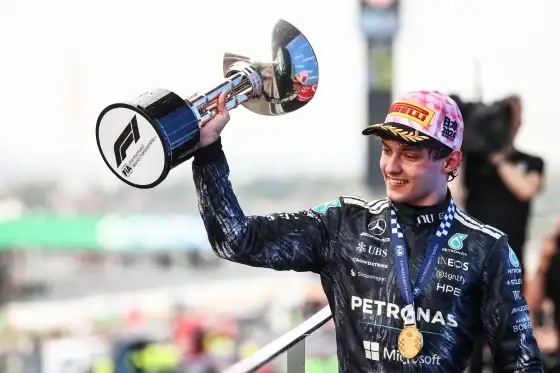
The last race, the Japanese Grand Prix at Suzuka, was won by Kimi Antonelli.
Races Rescheduled
Replacing the cancelled races was not possible.
The F1 calendar is planned months in advance. Each race involves complex logistics, including freight movement, staffing and infrastructure.
Finding a new venue at short notice was not realistic. There was also no time to organise ticket sales and operations.
Rescheduling was also ruled out.
The calendar is already tight. Adding two races later in the year would have disrupted the schedule. There was also uncertainty around safety in the region.
Cancelling the races was seen as the most stable solution.
Updated F1 2026 Calendar
- Round 1: March 6-8 – Australian Grand Prix, Melbourne
- Round 2: March 13-15 – Chinese Grand Prix, Shanghai (sprint)
- Round 3: March 27-29 – Japanese Grand Prix, Suzuka
- Cancelled:
Bahrain Grand Prix (April 10-12)
Saudi Arabian Grand Prix (April 17-19) - Round 4: May 1-3 – Miami Grand Prix (sprint)
- Round 5: May 22-24 – Canadian Grand Prix (sprint)
- Round 6: June 5-7 – Monaco Grand Prix
- Round 7: June 12-14 – Barcelona-Catalunya Grand Prix
- Round 8: June 26-28 – Austrian Grand Prix
- Round 9: July 3-5 – British Grand Prix (sprint)
- Round 10: July 17-19 – Belgian Grand Prix
- Round 11: July 24-26 – Hungarian Grand Prix
Summer Break
- Round 12: August 21-23 – Dutch Grand Prix (sprint)
- Round 13: September 4-6 – Italian Grand Prix
- Round 14: September 12-14 – Spanish Grand Prix, Madrid
- Round 15: September 24-26 – Azerbaijan Grand Prix (Saturday race)
- Round 16: October 9-11 – Singapore Grand Prix (sprint)
- Round 17: October 23-25 – United States Grand Prix
- Round 18: Oct 30 – Nov 1 – Mexico City Grand Prix
- Round 19: November 6-8 – Sao Paulo Grand Prix
- Round 20: November 19-21 – Las Vegas Grand Prix
- Round 21: November 27-29 – Qatar Grand Prix
- Round 22: December 4-6 – Abu Dhabi Grand Prix
F1 2026 Standings so far
After 3 races in the Formula 1 2026 season, Mercedes lead both championships.
Drivers’ Championship (Top contenders)
- Kimi Antonelli (Mercedes) – Leads after winning the Japanese Grand Prix
- Other frontrunners include drivers from Ferrari and leading midfield teams
Constructors’ Championship
- Mercedes – Early leaders
- Ferrari – Closely chasing
- Aston Martin – Also in contention
With two fewer races, the championship could become tighter. Every race will carry more weight in the title fight.
How will the break impact the title race?
The 5-week gap could play a big role.
Teams now have extra time to analyse data from the opening races. This is especially important in a new regulation era.
Front-runners like Mercedes and challengers like Ferrari can improve their cars. Teams further back, including Aston Martin, also get a chance to catch up.
With only 22 races instead of 24, consistency will be crucial in deciding both titles. Click here to make your predictions.
You can also read: