


Your 2026 NHL Playoffs Bracket Printable Guide
It usually starts the same way. The playoff field is set, someone in the group chat asks for a bracket, and within minutes you need a version that fits the job. One sheet for a quick office pool, another for handwritten picks at home, and sometimes a cleaner file for branded content or fantasy side contests.
That is why an nhl playoffs bracket printable works best as a toolkit, not a single download. The right bracket depends on how you plan to use it. A standard printout is best for simple winner picks. A blank template gives you more control for custom pools. Fillable files and spreadsheets make more sense if you are tracking results across a group.
For Canadian fans, that practical split matters. Playoff brackets still live on desks, office walls, bar counters, and fridge doors because paper is easy to share, easy to mark up, and easy to verify when a pool gets competitive. If you are following a tight Western Conference series and want matchup context beside your picks, pairing your bracket with Oilers vs Stars series analysis and predictions is often more useful than cramming extra notes onto the page.
The goal here is simple. Choose the right bracket format for the way you watch, track, share, or run your pool. That saves time, cuts confusion, and gives you a printable you will still want to use by Round 3.
1. Official NHL.com Playoff Bracket Template
The bracket to print when a pool needs one clear standard is the official league-style version.
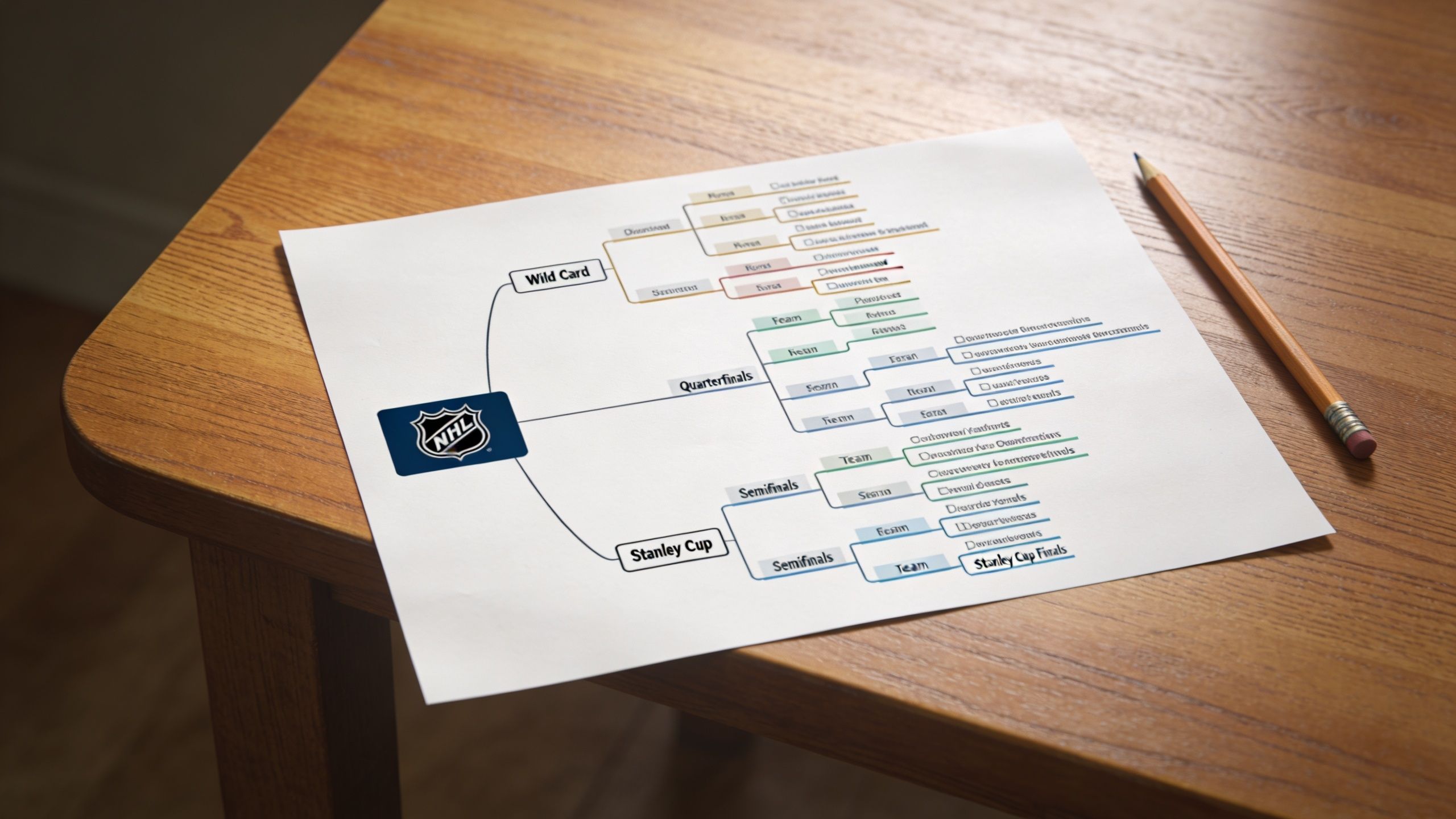
Its job is straightforward. It shows the full 16-team path in the familiar playoff format, with no extra scoring fields, side notes, or design clutter getting in the way. For a quick office pool, a bar giveaway, or a last-minute family bracket, that simplicity usually wins.
I use this format as the baseline option in any bracket toolkit because it solves the most common problem first. Everyone can read it right away. Everyone can mark it up by hand. Everyone can compare picks without arguing over where a series belongs on the page.
Best use case
Use this template for standard winner-pick pools and personal tracking. It is the right fit when the bracket itself needs to stay simple and the discussion happens somewhere else.
That matters during a heavy series slate, especially if you are following one side of the tree closely. If you want extra matchup context without crowding the page, pair the bracket with Oilers vs Stars series analysis and prediction.
One practical rule applies here. If several people are entering the same pool, give everyone the same base sheet. Mixed formats create avoidable disputes once handwritten picks start getting compared.
Where it helps, and where it falls short
What works:
- Clear bracket path: Easy to print, post, and read from across a desk or counter.
- Fast for handwritten picks: Good for pools that only care about series winners.
- Trusted format: Fans already know how to use it, which cuts setup time.
What doesn’t:
- Very little flexibility: It does not help with custom scoring, confidence points, or tie-break rules.
- No built-in pool admin: You still need a separate sheet or spreadsheet to track entries and standings.
- Plain presentation: Fine for utility, weaker for branded content or themed fan projects.
For pure function, this is still the safest printable in the stack. It is the one to choose when consistency matters more than customisation.
2. ESPN Printable NHL Playoff Bracket
A good playoff bracket does more than hold picks. It should help you compare paths, spot weak spots in your logic, and make quick revisions without turning the page into clutter.
That is the appeal of a media-style printable bracket.
This format suits fans who want a little more structure around each matchup. It works well for personal forecasting, discussion-heavy group chats, and branded picks content where the bracket needs to show more than a simple march to the Final. In a toolkit of playoff bracket options, this is the version for analysis first and filing second.
Where it helps most
Use this style when the bracket is part of the conversation. If you are weighing upset calls, checking conference paths, or revisiting picks round by round, the added context earns its space on the page.
I would also use it for small pools where people explain their picks out loud. A plain bracket is faster for collecting entries. A media-style sheet is better when the group cares why someone picked a six-game upset over the safer favourite.
The trade-off
More context usually means a busier print.
That matters. A bracket that looks sharp on a laptop can print with cramped labels, thinner writing space, and lines that get messy once several rounds are filled in by hand. For a one-sheet office pool, that is a real drawback. For solo tracking or content mockups, it is often worth it.
The best use cases are clear:
- Personal prediction sheets: Better for fans who revisit their picks after each round.
- Discussion-led pools: Useful when debate and matchup logic are part of the fun.
- Branded or editorial content: Stronger fit when presentation matters alongside the picks.
Best use case
Choose this bracket style if you want analysis support without building a custom template from scratch. It fills the gap between the bare-bones official sheet and a fully editable bracket.
One practical rule applies here too. Print a test copy before sharing it with a group. If team names, round labels, or note fields feel tight on paper, move to a cleaner layout. Extra information only helps if people can read it quickly.
Before printing, more context can improve decision-making. After printing, legibility usually matters more.
3. Blank Customizable Hockey Bracket Templates
The custom template earns its keep when the standard sheet breaks down. You print a bracket for the office, then realise you need a tie-breaker line, space for full names, and a layout that still reads clearly after a few photocopies. That is the point of a blank bracket. It gives you control over the format instead of forcing your pool into someone else’s design.
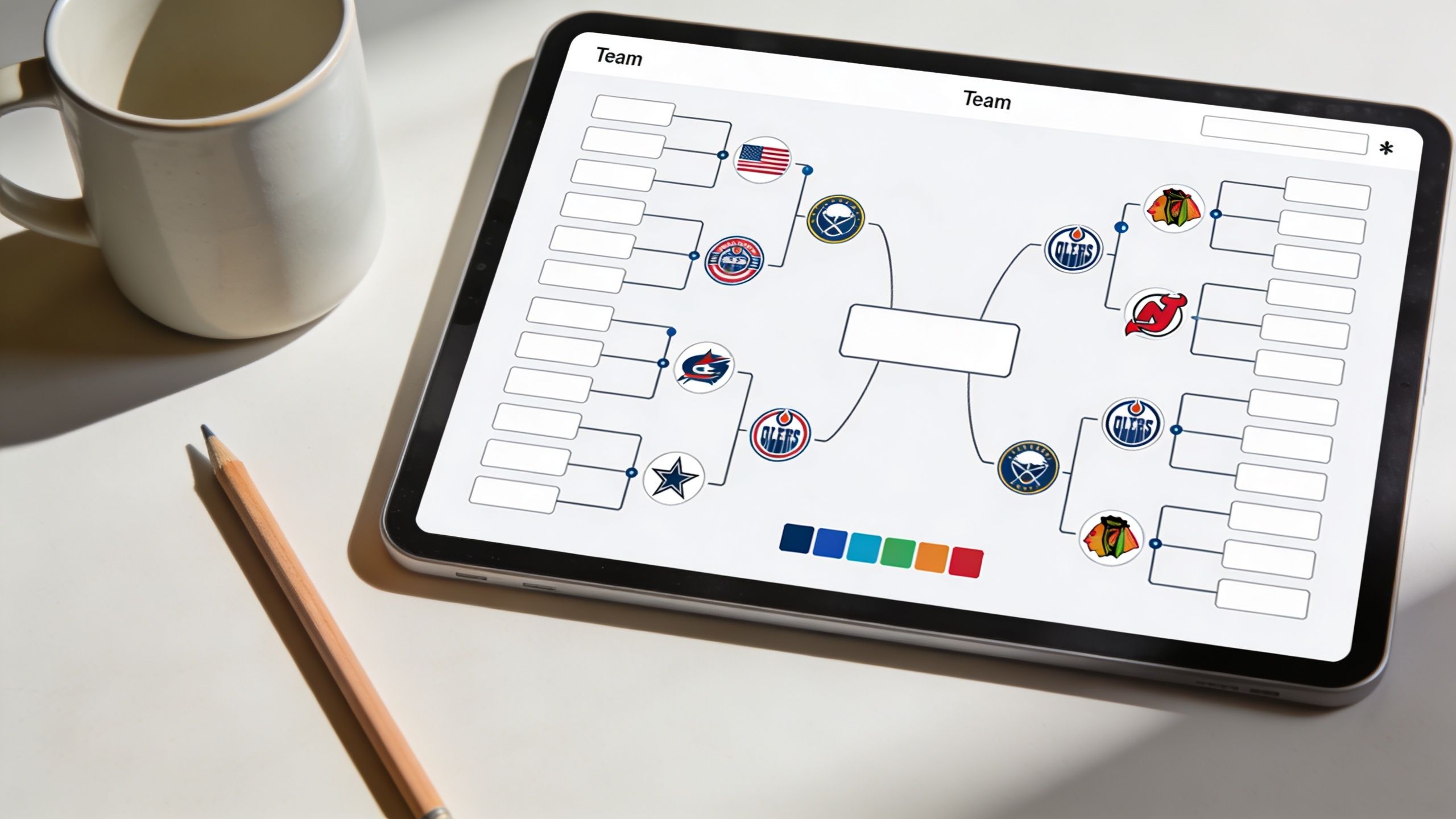
This category matters because it covers several different jobs. A pool manager needs clean entry sheets. A content team may want a branded playoff graphic. A family pool usually needs extra note space and simple scoring fields. One blank template can handle all three, but only if the base layout is built for the right use case.
Start with structure, not decoration.
The first decisions should be practical:
- Paper size: Set it for Letter or A4 from the start so the bracket does not shrink awkwardly at print time.
- Entry fields: Add name, contact, and submission deadline if more than a few people are entering.
- Tie-breaker box: Give it its own line instead of squeezing it into the margin.
- Writing space: Leave enough room beside each series for handwritten picks that stay legible after Round 1.
That sounds basic, but it is where custom brackets usually succeed or fail. A bracket can look sharp on screen and still be poor on paper. Thin lines, dark background blocks, and oversized logos create trouble fast, especially if entries are being printed on different home or office machines.
Custom layouts also work better for specialised formats. If your group tracks confidence points, upset bonuses, or hedged outcomes, a standard winner-only tree runs out of room quickly. In that case, pair the bracket with a simple scoring table or use a side panel for notes on strategy, especially if your pool includes people who are also learning how to hedge playoff picks and betting positions.
The trade-off is straightforward. The more you add, the more discipline the layout needs. Good custom brackets feel simple because the extra fields are controlled, not because the format is bare.
One rule I use every time. Print a black-and-white test copy before sharing the final version. If the bracket becomes cluttered without colour, the design is not ready.
Best use cases are easy to separate:
- Office pools: Add clear identity and deadline fields.
- Personal tracking: Leave extra room for notes and series predictions.
- Branded content: Keep the logo and theme in the header, then leave the bracket body clean.
- Special scoring formats: Attach a scoring grid instead of forcing everything into the bracket itself.
The strongest custom template is usually the one that changes the least. Adjust the sheet for your pool, protect the writing space, and keep the playoff path obvious at a glance.
4. How to Run Your Bracket Pool
The trouble usually starts ten minutes before puck drop. One person still has not submitted picks. Another wants to change a bracket after seeing the opening lineup. Someone else thought the scoring was round by round, not series by series. If the pool rules are loose, the bracket becomes an argument sheet.
Build the pool around the format
Different brackets suit different pool styles. A standard winner-pick sheet is best for casual office groups and family contests because everyone understands it quickly. A confidence pool works better for experienced groups that want more separation in the standings without turning the bracket itself into clutter.
The mistake is trying to make one printable do everything. Use the bracket for picks. Use a separate tracker for points, tie-breaks, and payment status. That setup stays cleaner on paper and is easier to audit later if someone questions the results.
Rules that prevent the usual problems
Set the rules before you collect a single entry, then keep them visible to everyone.
A pool that runs clean usually has four parts:
- One fixed deadline: lock all entries before the first game starts.
- One written scoring system: round values, confidence points, and upset bonuses need to be stated plainly.
- One standings sheet: post updates in one place so nobody is relying on private messages.
- One tie-breaker collected in advance: total goals in the Stanley Cup Final is easy to explain and easy to score.
That last point matters more than people expect. Tie-breakers feel trivial until two entries finish level and the group has no agreed method to separate them.
Match the bracket to the pool type
For a small social pool, I would keep it simple. Ask for series winners, award more points in later rounds, and avoid extra side rules.
For a sharper group, confidence points can add skill without making the sheet unreadable. Entrants assign higher values to the series they feel strongest about, which creates more movement in the standings and rewards conviction, not just the raw number of correct picks.
If your pool members also place wagers during the postseason, keep that strategy separate from bracket management. A playoff pool rewards long-range forecasting. Game-by-game betting rewards timing, price, and discipline. Anyone mixing the two should understand how to hedge playoff bets without wrecking bracket strategy.
The best-run pool is usually the one with the fewest judgment calls after the games begin.
My practical setup
Use one printable entry sheet per person. Number each submission. Save a photo or PDF of every completed bracket before the first puck drop. Then score from a master sheet, not from the originals.
That process is boring. It is also what keeps friends, co-workers, and customers from arguing over who picked what in Round 1.
If you are building this article’s bracket toolkit for real use, this section is the operating manual. Pick the printable that fits your group, lock the rules early, and keep the scoring outside the bracket whenever the format gets more complex.
5. Team-Specific Printable Bracket Templates
The usual scene is easy to picture. One bracket goes on the fridge for actual picks, and another goes on the wall at the watch party because nobody wants a plain black-and-white sheet beside team flags, jerseys, and drink specials.
That is the primary job of a team-specific printable. It is not the best all-purpose bracket in this toolkit. It is the right format when the bracket also needs to work as fan-facing material for one market, one venue, or one community.
For Canadian audiences, that use case is strong. Long-running club identities shape how fans engage with playoff material, especially in cities where the team brand carries the room. A Leafs-themed sheet in Toronto, a Canadiens version in Montréal, or an Oilers-branded handout in Edmonton usually gets more attention than a neutral bracket pinned to the same board.
The trade-off is clarity.
A good team-specific template keeps the playoff path readable first, then adds club colours, logos, or header treatment around it. A bad one does the opposite. If the design squeezes matchup lines, buries seed labels, or prints dark colours over small text, it stops being a bracket and turns into décor.
My rule is simple. Use team-branded templates for engagement, promotion, and atmosphere. Use a neutral layout for any bracket that decides standings, prizes, or money.
Best use cases:
- Watch parties: Better visual fit for bars, basements, and office gatherings built around one club.
- Local promotions: Strong for pubs, retail counters, radio remotes, and sponsor tables that need branded handouts.
- Fan communities: Useful for supporter groups, city-specific social posts, and giveaway sheets.
- Content packaging: Smart choice when the bracket is part of a playoff preview, newsletter insert, or printable media kit.
One practical setup works well. Print the team-themed version large for display, then keep standard entry sheets at the table for official picks. That split gives you the fan energy of a branded bracket without creating scoring headaches later.
If you are building an NHL playoff bracket toolkit that serves different jobs, this category fills the branding slot. It is not the cleanest pool format and it is not the best digital option. It is the bracket type that helps one fan base feel seen while still tracking the full postseason.
6. Interactive Fillable PDF and Spreadsheet Brackets
Your group chat is full of playoff picks, two people send blurry photos, one sheet is missing a winner in Round 1, and somebody edits the wrong matchup. A fillable bracket fixes that before the first puck drop.
Interactive PDFs and spreadsheet brackets are the cleanest option for groups that want one bracket they can type, save, share, and still print on paper. In a full NHL playoff bracket toolkit, this is the format built for accuracy and repeat use. It fits office pools, family pools spread across provinces, and content teams that need a branded bracket file without chasing handwriting or re-entering picks by hand.
The main trade-off is simple. Setup takes longer up front, but scoring and record-keeping get much easier once games start.
Where this format works best
Fillable files solve a different problem than a standard printable sheet. They keep entries legible, make duplicates easy to create, and give you a clean master copy for every round. That matters if you are collecting brackets from remote entrants or posting updated versions after each series.
Spreadsheets are stronger for pool management because they can handle point totals, tiebreakers, and revision control in one file. Fillable PDFs are better if you want a locked layout that people cannot easily break.
A practical split works well:
- Use a fillable PDF for collecting picks from a larger group.
- Use a spreadsheet for tracking standings and scoring.
- Export a final PDF before printing or posting the bracket publicly.
- Keep one untouched master file in case somebody overwrites a matchup path.
If your pool also tracks side markets or series-specific calls, it helps to pair the bracket with a separate sheet for NHL player props and playoff side picks. That keeps the bracket readable instead of cramming every prediction into the main grid.
Best practices that prevent bracket headaches
Protect the structure before you send anything out. Let entrants edit pick fields, but lock formulas, seed labels, and matchup lines. One accidental drag in a spreadsheet can break the entire bracket tree.
File naming matters too. Use clear version labels such as Round 1, Conference Finals, and Final. That sounds minor until three people submit updated files with nearly identical names.
For pool hosts, the best workflow is boring on purpose. Boring is good here.
- Build one master bracket.
- Test every editable field.
- Save a fresh copy for distribution.
- Collect entries in one folder.
- Score from a separate tracking file, not from the submitted originals.
The downside is compatibility. Some entrants open files on phones, some on office laptops, and some still want a printed sheet at the kitchen table. If your group includes all three, offer both formats from the start. A clean digital bracket should reduce friction, not create a tech support job.
7. Fantasy Hockey League Printable Bracket Templates
Saturday night, your league chat is split three ways. One manager is picking series winners, another is tracking which stars can carry a playoff roster through two rounds, and someone else wants space for side notes on shots, saves, and goal scorers. A standard bracket handles the first job. A fantasy bracket handles the rest.
The core function is different. Fantasy hockey league printable brackets are built to connect team advancement with player value. They give you room to mark roster exposure, note fragile matchups, and spot where one upset could wipe out half your scoring base.
That matters in pools where playoff success is tied to specific players, not just correct series picks. If your entry is loaded with one team’s top line or starting goalie, your bracket should show that concentration clearly. A plain bracket usually hides that risk.
Best use case for a fantasy bracket
Use this format for playoff pools that combine bracket picks with player-based scoring, draft-style playoff leagues, or any setup where managers care about both advancement paths and individual production.
The trade-off is simple. Fantasy brackets are more useful than a clean basic printable, but they can get messy fast if you try to track every stat inside the bracket itself. Keep the main tree focused on outcomes, then use short notes for player exposure, injury concerns, power-play roles, or goaltending uncertainty.
A practical setup works well:
- mark each series where you have heavy player exposure
- circle teams carrying multiple roster spots
- note risky dependencies such as one goalie or one scoring line
- flag matchup paths that could boost or cut off your fantasy scoring early
One pool can produce very different risk profiles even when two managers make the same series picks. A manager stacked with Edmonton scorers is living on a much narrower path than someone spread across deeper Eastern Conference rosters. A fantasy bracket makes that visible on one page.
If your group also debates side markets, keep those separate from the bracket itself. A companion sheet for NHL player props and playoff side picks keeps the bracket readable while still supporting the same fantasy decision process.
Choose fantasy hockey league printable bracket templates when your pool needs more than winner tracking. They are best for managers who want one printout that shows bracket logic, roster concentration, and where their playoff value can disappear in a single round.
Top 7 NHL Playoff Bracket Printables Compared
A good bracket saves time before the first puck drops. A bad one creates avoidable admin, unclear picks, and messy updates by round two.
This comparison works best as a selection tool, not just a feature list. Some printables are built for clean winner tracking. Others are better for pool management, branded sharing, team pride, or fantasy crossover. The right choice depends on what the bracket needs to do once games start.
| Template | Core function | Best use case | Practical strengths | Trade-offs | Cost |
|---|---|---|---|---|---|
| Official League Bracket | Standard playoff tree with a clean, familiar layout | Personal picks, casual pools, quick print-and-play use | Clear structure, easy to read, usually updated promptly, strong print quality for Letter or A4 | Little room for custom scoring, notes, or branding | Usually free |
| Media-Style Bracket | Bracket plus added context such as seeding, matchup notes, or analyst-style framing | Fans who want more information beside their picks | Better for informed discussions, stronger context for undecided series, useful for pool debates | Can feel busy on paper, and update timing is not always ideal | Free or partly gated |
| Customizable Templates | Editable bracket layouts for colours, logos, text, and format | Content creators, sponsors, bars, office events, social posting | Full design control, easy to adapt for promotions or house rules, strong for branded distribution | Takes setup time, and manual editing creates more room for mistakes | Free to paid |
| Pool Management Bracket | Bracket paired with rules, scoring, tie-breakers, and organiser notes | Running an office pool, bar contest, or group challenge | Keeps the pool consistent, reduces disputes, helps organisers stay organised | Less useful as a pure fan keepsake, depends on someone managing entries properly | Usually free |
| Team-Specific Templates | Brackets styled around one club's colours and fan identity | Watch parties, local communities, team-focused sharing | High fan appeal, easy to post or hand out, stronger emotional pull than neutral sheets | Narrower use, weaker for mixed-fan pools, not ideal for serious admin | Usually free |
| Fillable PDF and Spreadsheet Brackets | Digital brackets that can be edited, shared, saved, and printed | Remote groups, repeat pools, tidy record-keeping | Easy version control, better for collaboration, simple to correct and resend | Spreadsheet setup can be slower, and some groups still prefer a paper-first sheet | Free to paid |
| Fantasy League Brackets | Brackets built to track playoff outcomes alongside roster exposure or player notes | Fantasy managers and commissioners who care about path dependency | Helps connect series picks to roster concentration, injury notes, and scoring risk | More complex than a standard bracket, can become cluttered if overbuilt | Usually free with some gated options |
The strongest option for one-page simplicity is the Official League Bracket. For a cleaner pool process, the Pool Management Bracket usually does more work than a prettier design. If the bracket also needs to live in a group chat, shared drive, or remote office pool, Fillable PDF and Spreadsheet Brackets are often the better operational choice.
For branded content, Customizable Templates and Team-Specific Templates serve different jobs. One is built for flexibility and distribution. The other is built for fan energy.
That distinction matters. A pub running a playoff contest needs a printable that can carry house rules and sponsor marks without becoming hard to read. A fan group planning a watch party usually gets more value from a team-themed sheet that feels local and familiar.
Use the table to match format to function first. That is the difference between a bracket people use through four rounds and one that looks good for a day, then gets replaced.
Final Face-Off Making Your Picks
The best nhl playoffs bracket printable is the one that matches how you watch the postseason.
If you want the easiest path, use the official bracket. If you want more context around your picks, go with an analysis-led version. If you're running a pool, focus on rules and tie-breakers before design. If your group is spread out, use a fillable PDF or spreadsheet. If the playoffs are also shaping your fantasy decisions, use a fantasy-specific layout and keep your notes beside the bracket, not all over it.
The biggest mistake fans make is treating every printable bracket as interchangeable. They aren't. A standard winner-pick bracket is poor for confidence scoring. A heavily branded team sheet is fun, but weak for admin. A digital spreadsheet is tidy, but slower to set up. Each tool has a best use case. Once you choose for function first, the whole playoff experience gets easier.
There's also a strong Canadian angle to all of this. Printable playoff culture remains highly social. Fans still share sheets in offices, bars, family chats, and local pools because print is fast, visible, and easy to compare. That's especially true when the format is clear and the rules are set before the first game. A good bracket keeps everyone engaged deep into the playoffs, even after their Cup pick starts wobbling.
If I were advising most readers to choose just one setup, I'd keep it simple. Print one official bracket for your real picks. Keep one second bracket, either custom or digital, for updates, confidence scoring, or fantasy notes. That two-bracket setup covers almost every playoff habit without creating clutter.
So print early, lock your rules, and don't overcomplicate the sheet. The hardest part should be picking the winner, not figuring out which line to write on. Watch the first-round matchups closely, update with discipline, and make your biggest calls before public sentiment starts pushing everyone toward the same favourites.
Duelbits News keeps this kind of sports coverage practical, from playoff brackets and betting strategy to player props and matchup breakdowns. If you want more explainers and data-led reads across major sports, visit Duelbits News.