


How to Hedge Your Bets: A Guide for Sports Bettors
You’re one leg away from a big win, the match is about to start, and the question isn’t whether you can hedge your bets. It’s whether you should.
The short version is simple. Hedging is a tool, not a reflex. It works best when you’re managing a futures ticket, controlling bankroll swings, or building smarter fantasy exposure. It works worst when panic pushes you into a last-leg parlay hedge that gives away value for the feeling of safety.
What Hedging Your Bets Really Means
A lot of casual bettors treat hedging like surrender. It isn’t. Hedging means placing a second bet that offsets all or part of your original risk. The goal is to reduce variance, lock profit, or soften a loss if the original ticket loses.
That matters most when the ticket has already moved in your favour. You backed a team early. The market shifts. Your parlay survives four legs. Your outright pick reaches the final. At that point, you’re no longer deciding only who you think will win. You’re deciding how much risk you still want to carry.

Insurance, not indecision
The cleanest way to think about it is insurance. You pay a price to remove uncertainty.
Sometimes that price is worth it. If a futures bet has become large relative to your bankroll, taking money off the table can be smart. If you’re live-betting a volatile sport and momentum has clearly shifted, a partial hedge can stop one bad stretch from wiping out a good read.
Sometimes it isn’t worth it. If you hedge every time a ticket gets close, you’ll often bleed value without noticing.
Practical rule: Hedge because the numbers justify it, not because the sweat is getting uncomfortable.
What a hedge actually changes
A hedge doesn’t change the original bet. It changes your payout profile.
Instead of one ticket with a high upside and a full downside, you create a narrower range of outcomes. That usually means:
Less upside: You give away some profit if the original bet wins.
Less downside: You recover something if the original bet loses.
More certainty: Your result becomes easier to manage emotionally and financially.
For casual sports fans, that’s the part that matters. If you want to hedge your bets well, stop asking, “Can I guarantee something?” Start asking, “What am I giving up to guarantee it?”
That single question separates disciplined hedging from expensive comfort.
The Three Scenarios Where Hedging Makes Sense
Hedging is most useful in three spots. Not every close ticket needs it. These are the situations where the decision is at least worth serious thought.
The last leg of a parlay
This is the classic spot. You’ve hit every leg except one, and now you can bet the other side to guarantee a return.
The appeal is obvious. The problem is that the final hedge often comes at a bad price, especially after the book has already taken margin on the original parlay and then takes margin again on the hedge. That doesn’t mean never hedge. It means don’t hedge automatically.
If the final result would be life-changing relative to your usual stake size, locking something in can be reasonable. If the original parlay was already a high-risk flyer, the better move is often to accept the variance and let it run.
A futures bet that has moved heavily in your favour
This is the cleanest hedging spot in practice. You take a long price months earlier, your team or player reaches the final stretch, and now the market offers a realistic exit.
That’s where hedging becomes less emotional and more strategic. A futures ticket has already done the hard part. The remaining decision is whether your current exposure is too large for your bankroll or too valuable to leave unprotected.
A good example is any long-shot season bet that shortens dramatically before the championship match or playoffs. If you regularly follow North American markets, the same logic shows up in late-season futures and playoff outrights. That’s also why reading practical betting breakdowns, such as these CFL picks this weekend, can help you recognise when a number has truly moved and when it only looks dramatic at first glance.
A live match where the game state has changed
Live hedging makes sense when your pre-match read was right, but the current state creates a new risk that wasn’t priced in well before kick-off, tip-off, or first ball.
Think of a football bet where your side leads early but loses control in midfield. Or a cricket match where dew, toss impact, or a collapse changes the chase. Or an esports map where veto advantage mattered pre-match, but the in-series momentum now points the other way.
Market awareness matters as much as the odds. For Indian sports bettors, regional regulations and platform-specific liquidity, especially during high-volume events like the IPL, can shape whether a hedge is even available at a fair price, as discussed in this regional hedging context note.
That point matters more than most guides admit. In some markets, the right hedge exists in theory but not on the live board you can access. If pricing is thin or limits are awkward, a “good” hedge on paper can become a bad one in reality.
Core Hedging Methods and Calculations
There are two main ways to hedge your bets in practice. One is convenient. The other gives you more control.

Cash out
Cash out is the simplest version of a hedge. The book offers you a fixed return before settlement, and you either accept it or decline it.
That convenience is why many casual bettors use it. You don’t need to calculate stakes, compare outcomes, or think through edge cases. But convenience usually comes with a cost. The offer often bakes in value for the bookmaker, so you’re paying for speed and simplicity.
If all you want is certainty and the offer is acceptable to you, cash out does the job. If you care about squeezing the best possible number, manual hedging is usually sharper.
Manual hedging
A manual hedge means placing a new bet on the opposite outcome, or on a related market that offsets your original risk.
That gives you control over stake size. You can hedge fully, partially, or not at all. You can also choose the exact point where the price makes sense.
For live betting, that flexibility matters. A sportsbook with broad in-play coverage, such as Duelbits sportsbook markets, gives you more ways to structure a hedge when a football, cricket, or esports match starts moving quickly.
Here’s the key idea:
Work out your original potential return
Look at the current price on the opposing side
Decide your target result
Stake enough on the hedge to create that result
A simple football example
Say you backed one side before the match. They lead late, but the other team is piling on pressure and the live market has swung enough to make a hedge practical.
You don’t need a fancy model to make a decent decision. You need to answer two questions:
Do I want a guaranteed profit?
Or do I just want to reduce my downside?
If you want a guaranteed profit, you size the hedge so both outcomes leave you ahead. If you only want protection, you use a smaller stake and keep more upside if your original bet wins.
A good hedge doesn’t just reduce stress. It changes your risk in a way you can explain before the final whistle.
The zero-variance futures example
For futures, the cleanest manual hedge is the one that equalises outcomes. A worked futures hedge example shows a $200 bet on the Toronto Blue Jays at +500, creating a potential payout of $1200. If they reach the final and the opponent is +180, a $429 hedge on the opponent returns $771, which locks in at least $371 profit either way.
That’s what a zero-variance hedge looks like. No drama. No guessing. Just a fixed result.
The practical trade-off
Most bettors don’t need to fully hedge every time. In fact, full hedges can be too defensive when your original ticket still carries strong value.
A partial hedge often makes more sense when:
Your read still looks good: You want protection, not a full exit.
The live market is moving fast: You may get another better spot shortly.
The original ticket is small relative to bankroll: There’s no need to overmanage a bet you can comfortably absorb.
If you want to get better at this, study markets where price movement is easier to read. Player props can help train that skill because they force you to think in narrower, clearer outcomes. That’s one reason pieces like these NHL player props are useful for sharpening decision-making around live positions and exits.
Advanced Tactics for Parlays and Futures
Most hedging mistakes happen in two places. Parlays. Futures. They look similar on the surface because both create a tempting “lock profit now” moment. The maths under them is different.
Why last-leg parlay hedges usually cost you
The sharp view on parlays is blunt. Hedging the last leg often feels good and performs badly over time.
A statistical breakdown of a 5-team parlay hedge makes the point clearly. A bettor placed $100 CAD on a 5-leg parlay at decimal odds of 2.25, 1.80, 2.50, 1.60, and 2.15, creating a potential payout of $1,620 CAD and net profit of $1,520 CAD if all five legs won. After the first four legs hit, the final leg at 2.15 implied a 46.5% win probability. The bettor then hedged by placing $1,100 CAD against the final leg to lock in $900 CAD profit.
The issue is expected value. The no-hedge position carried $1,458 CAD in EV. The hedge reduced that to $1,382 CAD. That’s $76 CAD in EV given away, a 5.2% drop.
That doesn’t make the hedge irrational in every personal situation. It does make it expensive.
A better way to think about parlay hedges
If you still want to hedge a parlay, decide what you’re buying.
Are you buying certainty because the payout is huge relative to your normal stake? Fine. Are you buying relief because you don’t want to watch the final leg? That’s where bettors get picked apart.
A useful middle ground is to hedge for a specific target, not for maximum comfort. Pick the minimum guaranteed return that would matter to you, then calculate around that.
Here’s a simple way to frame it.
| Desired Guaranteed Profit | Hedge Stake Required | Outcome if Parlay Wins | Outcome if Parlay Loses |
|---|---|---|---|
| Small guaranteed return | Smaller hedge stake | Higher final profit | Smaller locked result |
| Medium guaranteed return | Moderate hedge stake | Balanced outcome | Balanced outcome |
| Large guaranteed return | Larger hedge stake | Lower final profit | Higher locked result |
That table is deliberately simple because the exact stake depends on the current opposing odds. The point is strategic. The more safety you buy, the more upside you sell.
Futures are different because time did the hard work
Futures hedging is where disciplined bettors can justify a more structured approach. By the time a futures ticket is hedgeable, your position has already improved through multiple results and market shifts.
That’s why bankroll matters more here than it does with a casual parlay. In the verified modelling on Canadian betting strategy, a CAD 10,000 bankroll with a +300 futures bet that moved to -110 supported a full hedge at breakeven that preserved 100% EV while cutting variance by 68%, using Kelly-style logic from the Unabated hedging analysis. The same data also showed that at -175, only an 18% hedge of the position, or $1,458 CAD, retained positive expected value.
That’s the key lesson. Futures hedging is not just “bet the other side now.” It’s position sizing. Sometimes the right answer is a full exit. Sometimes it’s a light trim. Sometimes it’s no hedge at all.
If your hedge size is random, your process is random. Futures tickets deserve better than that.
What works in real betting
For parlays, the practical rule is simple. Default to no hedge unless the payout has become outsized for your bankroll or you’ve already decided in advance that you’ll reduce risk at the last leg.
For futures, use a more deliberate checklist:
Check exposure first: If the possible payout is now big relative to your bankroll, hedging gets more attractive.
Use the current number, not the old story: Your early good pick doesn’t matter. The current market does.
Prefer partial hedges when edge remains: You don’t need to flatten every position.
That difference matters. Parlays tempt you to react. Futures reward planning.
How to Hedge in Fantasy Sports and Esports
Fantasy players hedge differently. They don’t always need an opposite side bet. Often, they need a better portfolio.
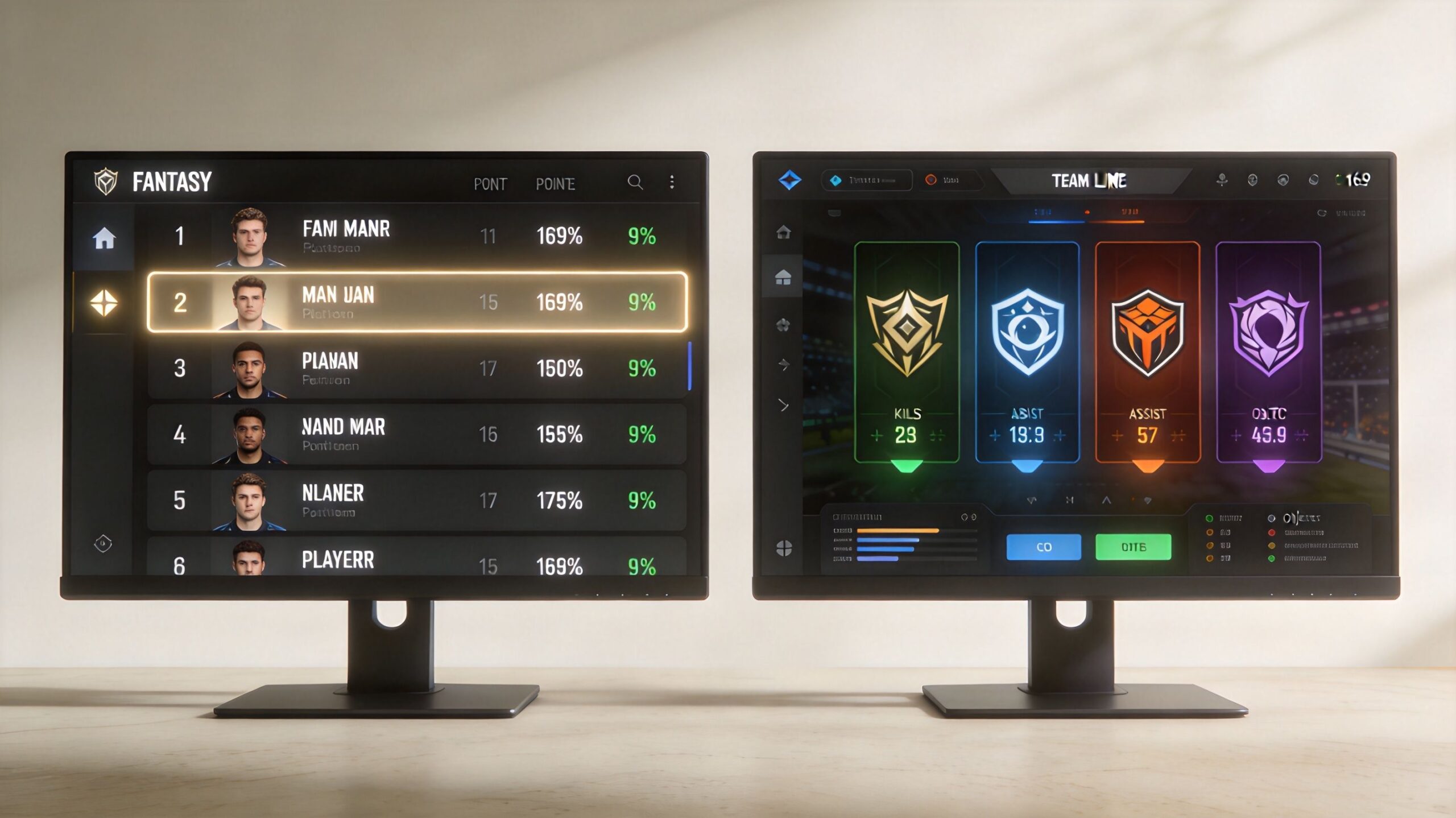
Fantasy lineups are a portfolio, not a single opinion
A common mistake in IPL fantasy is building one “best” lineup and treating it like a lock. That lineup might be sharp. It might also be fragile. If your captain fails, if the pitch behaves differently than expected, or if a popular stack collapses, your whole slate goes with it.
That’s why stronger players spread exposure. A fantasy hedging note on portfolio construction points out that expert players often use contrarian lineups in smaller contests to hedge against a main, consensus-heavy build failing.
A practical IPL version looks like this:
Main lineup: Built around the obvious top-order stack and the popular captain.
Hedge lineup: Uses a different captain, leans into a less popular bowling angle, or backs the opposing chase script.
If the chalk hits, your main lineup carries you. If the match breaks oddly, the hedge lineup keeps your night alive.
The all-in player versus the portfolio player
The all-in player wants to be right once, perfectly.
The portfolio player wants to be paid when the match unfolds in one of several plausible ways.
That difference matters in volatile sports. T20 cricket swings fast. So does esports, especially in best-of series where map pool, side selection, and momentum can flip the entire read after one map.
Esports hedging is often cleaner than people think
Tournament outrights in esports behave a lot like traditional futures. You back a team before the event. They reach the final. Now you can hedge the other finalist and secure a return.
That’s straightforward enough. The sharper version is doing it with context. If your outright pick reached the final through a favourable bracket, but the opponent now has the better map pool or looked stronger in semis, a hedge makes more sense than blind loyalty to the original ticket.
For readers who follow major event structures, this PGL Bucharest 2026 guide is the kind of format breakdown that helps you spot where futures value and final-round hedges can appear.
In fantasy and esports, hedging is less about fear of losing and more about giving yourself more than one profitable route through uncertainty.
That’s the angle casual bettors often miss. Hedging doesn’t always mean betting against yourself. Sometimes it means building a second path that pays if your first read is only partly right.
The Golden Rules of Smart Hedging
Good hedging is disciplined. Bad hedging is emotional with maths sprayed on top.
The rules worth keeping
Decide your hedge point early: If you know you’ll consider a hedge at a final, a last leg, or a live swing, set that rule before the event starts.
Calculate the cost: Every hedge buys safety by selling upside. Know what you’re giving away.
Don’t hedge tiny edges for tiny returns: If the guaranteed amount barely matters, the trade usually isn’t worth the value loss.
Match the hedge to your bankroll: A big payout on paper can still be a small result relative to your betting bank, and vice versa.
Use partial hedges more often than full hedges: They’re usually the better answer when your original ticket still has merit.
Never hedge just to calm nerves: If your only reason is anxiety, step away and let the bet stand.
The best bettors don’t hedge because they’re scared. They hedge because a specific spot justifies a specific adjustment.
If you want one sentence to remember, use this: hedge your bets when it improves your overall position, not when it merely makes the sweat easier.
For more betting explainers, sport-specific strategy pieces, and timely market coverage, keep an eye on Duelbits News.