

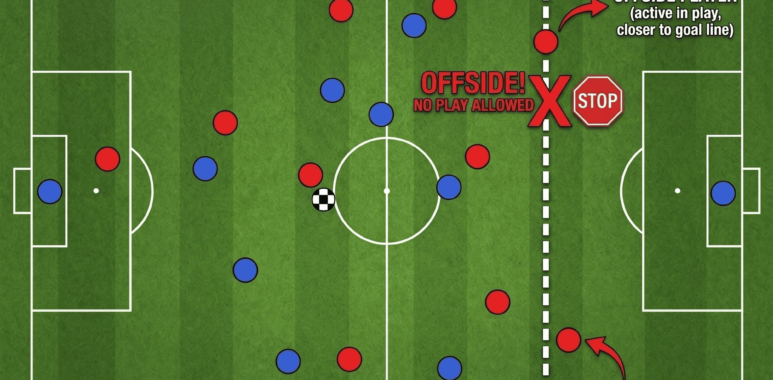
Football Offside Rule Explained: A Bettor’s Guide
A goal goes in, your bet looks alive, then the screen flashes for a VAR review and suddenly everyone in the room realises they're not as sure about offside as they thought.
The key takeaway is simple. If you understand three things, you understand offside well enough to read most match situations correctly: position, timing, and involvement. That matters for fans, but it matters just as much for bettors, because one delayed flag or one overturned goal can flip totals, player props, and live markets in seconds.
Offside still causes chaos because people often mix up two separate questions. First, was the attacker standing in an offside position? Second, did that position become an offence? Those are not the same thing. A player can stand beyond the line and still not be penalised.
That's why a proper football offside rule explained piece should do more than repeat the law. It should help you read the phase of play in real time. Once you can do that, matches look different. Defensive lines make more sense. Curved striker runs make more sense. Even those long VAR pauses start to feel less random.
If you follow match analysis and betting angles through Duelbits News football coverage, this is one of the core rules worth mastering because it shapes both the action and the market reaction.
Why The Offside Rule Still Confuses Everyone
Most confusion starts with what fans think they saw versus what the law judges.
From the stands or on the sofa, you usually track the ball. Offside asks you to track something harder. You need to read the passer, the runner, the second-last defender, and the exact instant the ball is played. That's a lot to process at full speed.
Then VAR adds another layer. A move that looked fine in open play gets frozen, zoomed in, and dissected frame by frame. The emotional swing is brutal. One second it's a clean finish. The next, people are arguing about a shoulder, a boot, or whether the attacker even affected play.
Why the rule exists
Offside isn't there to spoil attacks. It exists to stop attackers from camping near goal and waiting for easy passes. Without it, football would lose much of its structure. Defenders couldn't push up. Midfield spacing would collapse. Timing runs would matter less.
That's the part casual viewers sometimes miss. Offside isn't just a referee's technicality. It helps create the chess match between a back line trying to hold shape and attackers trying to break it at exactly the right moment.
Football feels fastest when the margins are smallest. Offside is the rule that turns those margins into real consequences.
Why bettors should care
For betting, offside matters because it changes more than the final scoreline. It affects momentum, stoppages, and how aggressive teams can be. A side that lives on through balls may create dangerous moments, but it may also kill attacks with mistimed runs.
A bettor doesn't need to memorise every clause. You just need to recognise the repeatable patterns:
-
High defensive line: Attackers get space in behind, but the offside risk climbs.
-
Direct passing team: More early balls forward usually means more borderline runs.
-
Striker style: Some forwards play on the shoulder constantly. Their threat and their risk come together.
-
VAR environment: Marginal calls are more likely to be checked and overturned than they were in older eras.
Once you start viewing offside as a live tactical battle instead of a random interruption, the rule becomes much easier to understand.
The Core Offside Rule Deconstructed
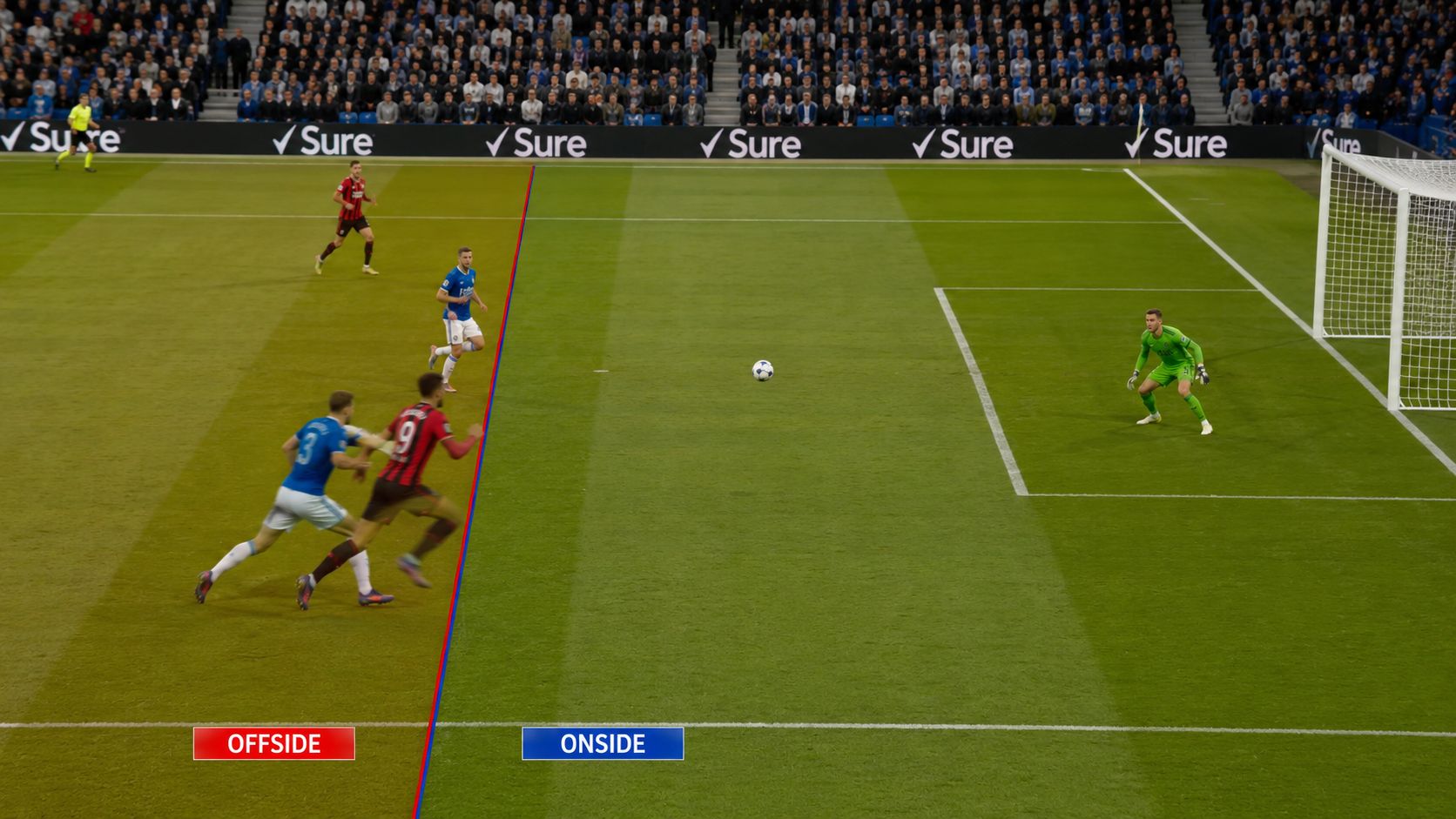
The cleanest way to learn offside is to split it into two parts. First, ask whether the player is in an offside position. Then ask whether the position matters at the exact moment the pass is played.
According to The FA's Law 11 wording, a player is in an offside position if any part of the head, body, or feet is nearer to the opponents' goal line than both the ball and the second-last opponent. Hands and arms don't count. The same law also states that a player level with the second-last defender is onside, a principle clarified in 1990 and still central to the modern rule.
Start with the second-last opponent
Many people often misunderstand this point. The rule doesn't say “last defender” in the everyday sense. It says second-last opponent.
Usually, the goalkeeper is one of the two opponents nearest the goal, so fans casually talk about the “last defender”. But the law counts opponents, not job titles. If the goalkeeper has rushed outfield, two outfield players may become the reference instead.
A simple way to picture it is this:
-
Ball matters
-
Second-last opponent matters
-
Your position matters only in relation to those two markers
If the attacker is behind the ball, they can't be offside in that moment. If they're level with the second-last opponent, they're onside.
Timing is everything
Offside is judged at one precise instant. Not when the player receives the ball. Not when they shoot. Not when the TV replay catches up. It's judged when a teammate plays or touches the ball.
That distinction clears up a lot of arguments.
Take a common scenario. A midfielder threads a pass forward. The striker starts behind the line, then sprints past the defenders and collects the ball well clear. Fans often react to where the striker is when the ball arrives. The law cares about where the striker was when the pass left the midfielder's foot.
Practical rule: Freeze the action in your mind at the moment of the pass, not the moment of the finish.
A plain-English match example
Think of an attacker standing just beyond the back line while a teammate has possession in midfield. If the pass is played while that attacker is already closer to goal than both the ball and the second-last opponent, the attacker is in an offside position.
Now change one detail. The attacker delays the run by half a step and stays level until the ball is released. That's onside, even if the attacker then races clear.
That's why elite forwards spend so much time bending runs, checking shoulders, and pausing before they explode. Great movement isn't just about speed. It's about legal timing.
When an Offside Position Becomes an Offence
This is the part that causes most pub debates. Being in an offside position is not automatically an offence. The player must then become actively involved in the play.
That active involvement usually shows up in three broad ways. The easiest way to remember them is through match scenes you've already seen a hundred times.
Interfering with play
A striker waits beyond the line, a teammate clips a pass over the top, and that striker runs on to control it. That's the most obvious offside offence. The player in the offside position directly plays or touches the ball.
There's rarely much mystery here. If the player was ahead of the legal line at the instant of the pass and then becomes the receiver, the flag follows.
This is the classic poacher moment. The movement might be sharp and the finish tidy, but if the run started too early, the whole attack dies there.
Interfering with an opponent
Now, things get trickier.
Suppose an attacker stands in front of the goalkeeper during a shot from distance. The attacker never touches the ball. Even so, that attacker may still be penalised if the position blocks the keeper's view, distracts the keeper, or affects the keeper's chance to react.
Another version is when an offside player challenges a defender for a ball, forcing the defender to engage. Again, the player doesn't have to touch the pass to commit the offence. The key question is whether the offside player changed the opponent's ability to play.
If an offside player makes a defender or goalkeeper deal with them, that player is no longer passive in any meaningful sense.
Gaining an advantage
Now take a shot that crashes off the post and falls to an attacker who had been in an offside position when the original effort was taken. If that attacker collects the rebound, the offence can still be given.
The same logic applies when the ball rebounds unexpectedly off an opponent rather than being clearly and deliberately played. The attacker benefits from having started in a forbidden position.
This point matters because fans often think a touch by a defender automatically resets offside. It doesn't. A rebound, ricochet, or deflection isn't the same as a composed, deliberate play.
A quick way to judge grey areas
When you're unsure, ask these questions in order:
-
Was the player in an offside position when the teammate played the ball?
-
Did the player then touch it?
-
If not, did the player affect an opponent anyway?
-
If the ball came loose, was it a rebound or loose break that gave that player an advantage?
That sequence won't solve every edge case, but it will solve most of them.
Here's the practical betting angle. Not all dangerous-looking attacks are equal. Some teams create apparent chances through early runs that are vulnerable to offside calls. If you recognise that pattern during a match, you can judge whether pressure is real or fragile.
How VAR Changed Offside Calls Forever
VAR didn't rewrite the law, but it changed how ruthlessly the law is enforced.
Before video review, assistant referees had to judge offside in real time while sprinting the line. Tight calls were always difficult. Human error was part of the game, for better and worse. VAR shifted those moments from instant judgement to forensic review.
A peer-reviewed study covering Europe's top leagues found that offside offences per match declined significantly after VAR implementation, with higher offside levels in the Bundesliga and La Liga than in the Premier League. That matters because it shows two things at once. First, technology changed outcomes on the pitch. Second, tactical style still shapes how often teams trigger the rule.
What VAR is actually checking
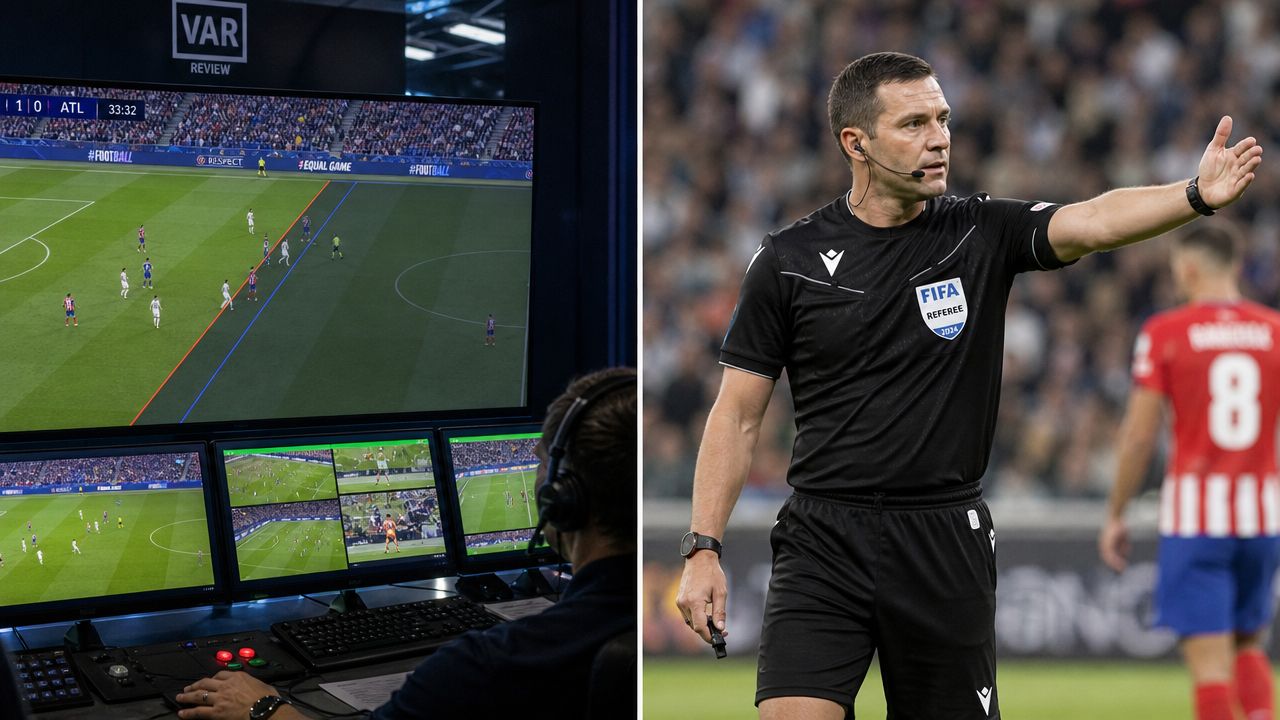
When VAR reviews an offside, officials try to identify the exact frame when the passer touches the ball. Then they compare the attacker's legal scoring body parts against the relevant defender line.
That sounds straightforward, but in practice it turns a fluid action into a freeze-frame geometry problem. Margins that looked invisible at match speed become decisive.
The modern result is familiar to every fan. Celebrations pause. Defenders hold their breath. Bettors stare at suspended markets and wait.
Why the numbers matter tactically
The decline in offside offences after VAR tells us something useful. Teams adapt when enforcement becomes sharper.
Attackers may delay runs a split second longer. Coaches may favour different passing windows. Defenders may trust the line more if they believe reviews will catch marginal breaches. That doesn't remove offside from the game. It changes how players manage risk.
The same study's league contrast is just as revealing. More direct styles and more aggressive vertical attacks can produce more offside situations. That means offside isn't random noise. It often reflects a team's tactical identity.
In some matches, repeated offside calls tell you as much about a side's attacking plan as any possession stat does.
The betting impact in live markets
In this situation, offside knowledge pays off fastest.
A disallowed goal can hit totals, next-goal markets, player scorer bets, and live momentum reads all at once. During a VAR check, prices can freeze or move sharply once the decision lands. On Duelbits football markets, that kind of moment is part of the live-betting reality. The law and the market meet in real time.
If you're betting live, watch for these clues:
-
Repeated borderline runs: The attacker is threatening space, but the timing isn't clean yet.
-
A high line under pressure: One successful timed run can still break the match open.
-
Frequent VAR reviews: Market swings may be abrupt, especially around goals and cards tied to the same sequence.
-
League style differences: Direct, vertical matches often carry more offside tension than slower build-up games.
The smart takeaway isn't to fear offside chaos. It's to price in the possibility that some attacks won't survive review.
When the Offside Rule Does Not Apply
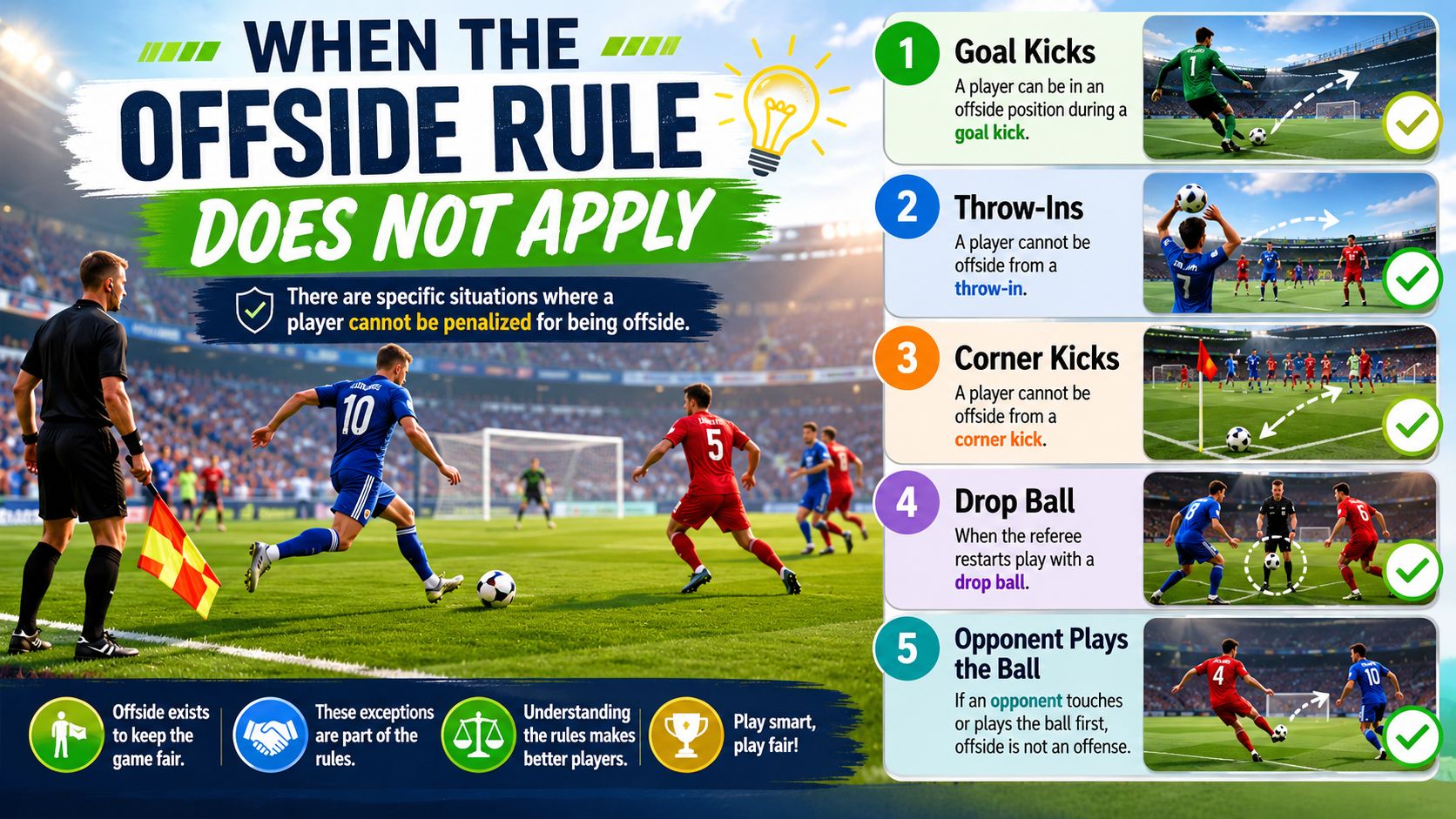
Some of the best offside knowledge comes from knowing when to stop looking for it.
There are a few restarts where a player cannot be penalised for offside directly. These exceptions are useful because they cut through the noise fast. If you know them, you can instantly ignore a lot of bad appeals from players and commentators.
Goal kicks
A player cannot be offside directly from a goal kick.
The logic is simple. A goal kick restarts play from a dead-ball situation in the defending team's area. The law allows the attacking shape to stretch the pitch immediately. So if a forward receives the ball from a goal kick in a seemingly advanced position, that alone is not an offside offence.
Throw-ins
A player also cannot be offside directly from a throw-in.
This catches people out because throw-ins often launch quick attacks. A teammate can stand high, receive the ball, and still be legal because the restart itself is exempt.
That's why defenders who stop and appeal after a long throw often put themselves in danger. Play first. Complain later.
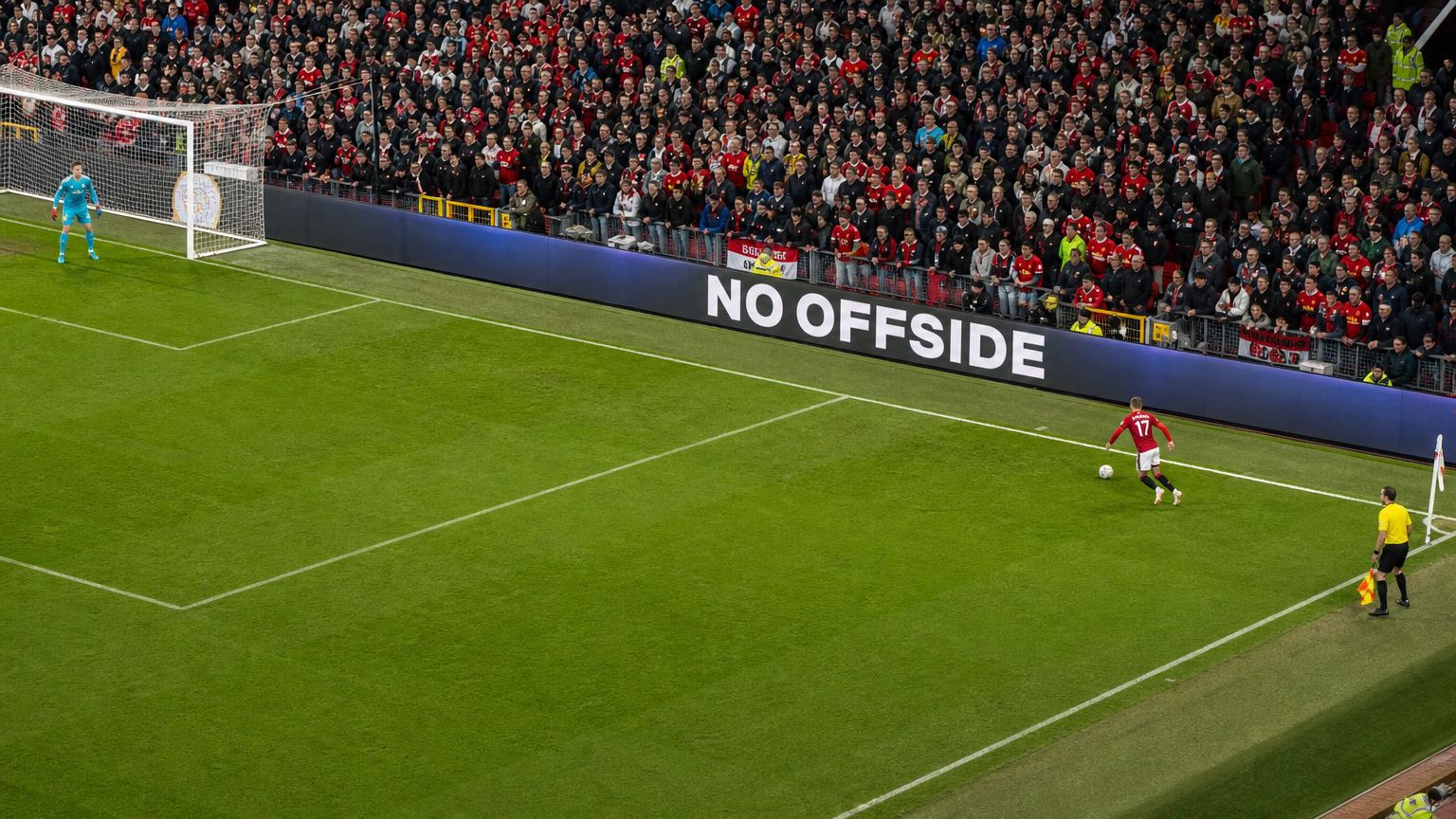
Corner kicks
There is no offside offence directly from a corner kick either.
This exception has deep roots in the law's history. It helps explain why attackers can crowd the box freely from corners without the same line-tracking concerns you get in open play.
A simple reference list
Keep this short list in mind during any match:
-
Goal kick: No offside directly from the restart
-
Throw-in: No offside directly from the restart
-
Corner kick: No offside directly from the restart
What happens after an offside is given
When offside is called, the restart is an indirect free-kick for the defending team from the place where the offence occurred.
That matters because the flag doesn't just erase a chance. It hands possession back and resets the whole pattern of play. For bettors, that can cool a period of pressure immediately, especially if the attacking team had started to pin the opponent back.
Using Your Offside Knowledge to Win
Most fans watch the ball. Smarter fans watch the line.
If you want to use a football offside rule explained guide in a practical way, focus on patterns instead of isolated incidents. The best clues usually repeat across a full half. A striker keeps drifting early. A centre-back pairing steps up aggressively. A playmaker keeps looking for the same channel ball.
What to watch live
These are the cues that matter:
-
The back line's height: A brave line can squeeze space, but one mistimed step opens a huge lane.
-
The striker's body shape: Forwards who keep checking their run are often close to timing a clean break.
-
The passer's habits: Some midfielders release the ball early. Others need an extra touch, which can trap runners offside.
-
Assistant referee behaviour: Even before the flag, you can often sense whether a line is being tested repeatedly.
How that translates to betting judgement
You don't need exact prices to use the information well. You need context.
If a team keeps getting caught offside, that can mean two different things. It may signal wasteful attacks that won't convert into clean chances. Or it may signal that one adjustment in timing could open up a big opportunity. Reading which version you're seeing is where the edge sits.
That's also why broader betting education matters. If you're trying to manage risk during volatile live moments, guides like football betting insights and explainers can help you think more clearly about when to react and when to wait.
The best use of offside knowledge isn't arguing with the replay. It's spotting whether the same move is likely to come off next time.
A bettor who understands offside reads danger earlier, judges disallowed goals more calmly, and makes better decisions when a match starts swinging.
Offside Rule Frequently Asked Questions
Can a player be offside in their own half
No. A player must be in the opponents' half to be in an offside position.
Is level onside or offside
Level is onside. If the attacker is level with the second-last opponent at the moment the ball is played, play continues.
Can a player be offside from a free-kick
Yes, in normal open-play terms. A free-kick is not one of the restart exceptions covered earlier.
Does any defender touch reset offside
No. A deliberate play by a defender can change the phase. A simple deflection or rebound usually does not.
Why do bettors need to know that difference
Because one touch can decide whether a goal stands, and that can decide whether you hedge, hold, or stay out. If you want to think more clearly in those moments, this guide to hedging your bets is a useful next read.
If you want more clear, fast sports explainers like this one, follow Duelbits News for football analysis, betting context, and match-day guides that help you read the game with more confidence.