


Your 2026 Schedule for Football Playoffs: A Full Guide
The key dates are tighter than most fans realise. The 2025-26 College Football Playoff runs from Dec. 19, 2025 to Jan. 19, 2026, and the NFL postseason starts almost immediately after on Jan. 10, so the best schedule for football playoffs is the one you build before January gets crowded.
If you follow both college and pro football, the early takeaway is simple. Use official brackets first, then add one live schedule feed, then add one custom tracker you control. That stack beats scrolling social feeds on game day.
Most schedule pages stop at dates. Serious fans need more than dates. In California, that matters even more because the Rose Bowl in Pasadena is a fixed College Football Playoff quarterfinal site in the 12-team format, with the 2025-26 Rose Bowl scheduled for Jan. 1 at 4 p.m. local time, while the semifinals followed on Jan. 8 and Jan. 9 and the national championship was set for Jan. 19 in Miami, according to the 2025-26 College Football Playoff schedule. That gives West Coast fans one anchor date every season.
What follows isn't a static fixture dump. It's the most practical way to track the full schedule for football playoffs across brackets, official publications, live feeds, and custom tools.
1. ESPN Football Playoffs Schedule Templates
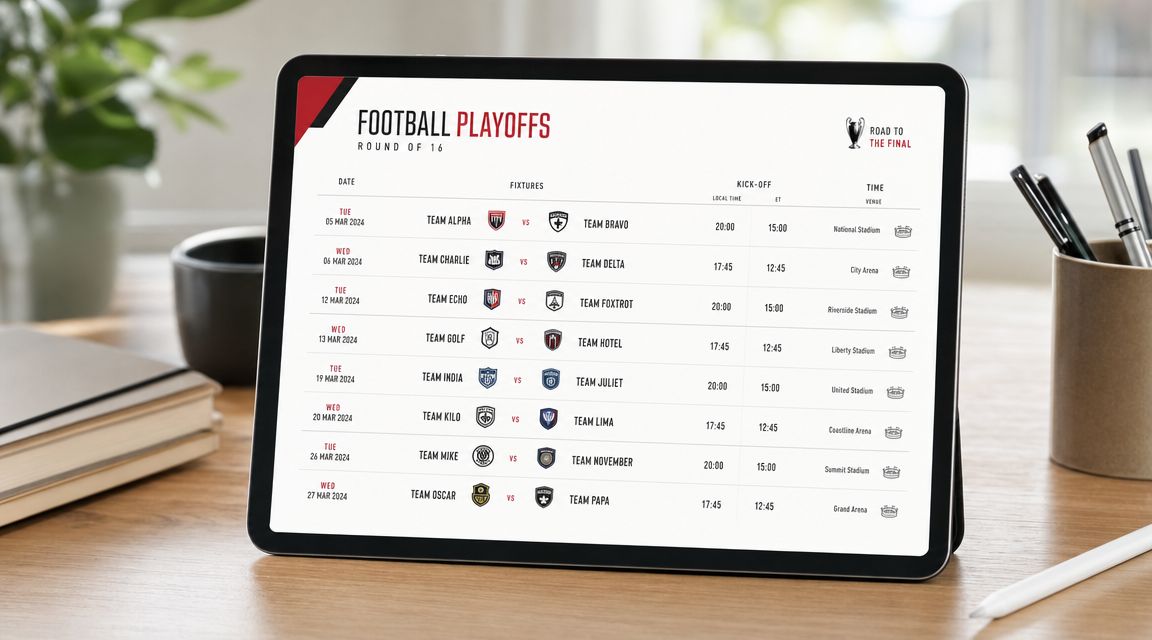
ESPN-style schedule templates are useful because they solve the first problem fast. They put dates, rounds, and kickoff windows into one familiar layout. That matters most when playoff calendars compress.
For January 2026, compression is the whole story. The College Football Playoff national title is on Jan. 19, while the NFL had already opened its postseason on Jan. 10. If you wait until the second week of January to organise your viewing, you're already behind.
Why these templates work
A good schedule template does three things well. It shows the tournament path, it updates as matchups lock in, and it makes time conversion easier for readers who follow more than one league.
That last point is underrated. The NFL's official postseason calendar lists all times in Eastern, so California readers need local conversions when they plan around Wild Card Weekend, Divisional Playoffs, and the final at Levi's Stadium in Santa Clara on Feb. 8, according to the NFL's 2026 important dates calendar.
Practical rule: If a schedule page doesn't show round progression and local kickoff context, it's a reference page, not a planning tool.
A strong editorial workflow is to pair a template with one deep explainer. If you're tracking major tournament timing beyond North American football, the FIFA World Cup 2026 full schedule, venues, groups, FAQs and more is the kind of companion page that gives a wider event calendar rather than a single bracket.
Best use case
Use this format at the start of every playoff week. It's best for broad planning, not final confirmation. Fans who bet casually should also like it because it highlights when one game window could run into another, which matters if you're considering live markets later in the day on Duelbits sportsbook coverage.
2. Official League Playoff Bracket Formats
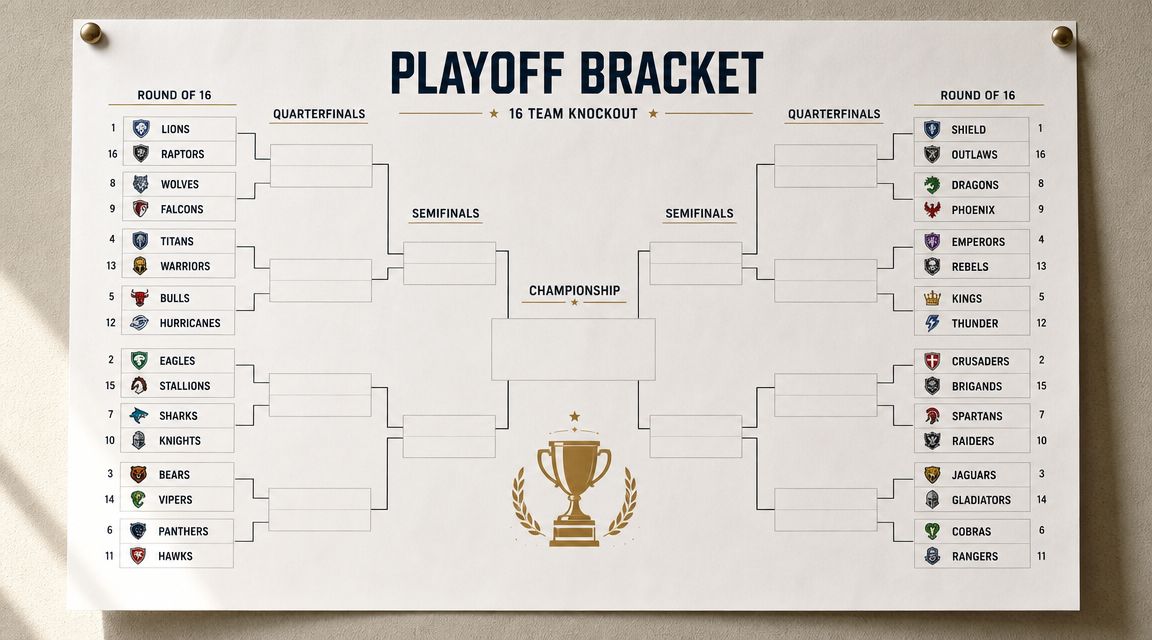
Official bracket formats matter because they tell you how teams move, not just when they play. That sounds basic. It isn't. Plenty of fans know the date but still misread the route.
The clearest current example comes from college football. The NCAA's playoff structure assigns the quarterfinals to the Cotton, Orange, Rose, and Sugar Bowls, with the highest-ranked teams distributed based on seeding and historic bowl relationships. That detail changes how you read the calendar because the route is partly fixed by bowl structure, not just by weekly results.
Why the bracket is the schedule
In practice, bracket format is scheduling logic. California fans can read that directly through the Rose Bowl's fixed status. The state doesn't just happen to host a major game. It holds a permanent quarterfinal place in the 12-team playoff setup, which gives Pasadena a recurring postseason role.
That's why official formats beat generic bracket graphics. A generic graphic shows who might play. The official format shows why a game lands where it does.
Here's where that helps most:
Seeding clarity: Official formats explain why a team is routed to a specific side of the bracket.
Venue certainty: Fixed sites matter when you're planning travel or booking around neutral-site rounds.
Editorial accuracy: If you're writing playoff previews, format pages prevent basic structural mistakes.
Fans often treat the bracket as decoration. It's actually the rulebook for the month.
If you like printable tournament logic in other sports, the NHL playoffs bracket printable guide is a useful comparison for how bracket structure shapes viewing and betting prep.
Where fans get caught out
They confuse bracket release with fixture release. Those aren't the same thing. The format tells you the path before every matchup is known. That's what lets you spot likely travel pressure, likely turnaround issues, and possible neutral-site swings early.
3. Fixture List Publication Sources
If bracket pages explain the route, fixture publications handle the daily reality. They're where kickoff times, revisions, and broadcast windows become usable.
For weekly updates, most fans should start with official league sites and major broadcast fixture pages. They're the primary publication layer. They're more reliable than reposted social images and faster to verify than fan-made trackers.
What a strong fixture page should include
A serious fixture source needs more than date and opponent. It should also answer three practical questions. When does the game start in your time zone, how does the weekend sequence affect travel, and what windows might overlap with other playoff rounds?
That matters in January because the college and NFL calendars now overlap. The College Football Playoff ran from Dec. 19, 2025 through Jan. 19, 2026, with quarterfinals on Jan. 1 and semifinals on Jan. 8 and 9, while the NFL postseason began Jan. 10, according to the official College Football Playoff schedule page. Casual fans who follow both can easily miss a window if they track each league in isolation.
A good fixture workflow looks like this:
Check official publication first: Confirm the date and round from the league.
Check broadcast listing second: Confirm kickoff timing and channel placement.
Save your own note third: Mark the games that create same-weekend conflicts.
That's also why a focused fixture explainer helps. If you're tracking European knockout rounds in parallel, the UCL round of 16 fixtures and big matches guide fits that role better than a bare list.
Best practical habit
Don't just bookmark the fixture page. Archive the publication date mentally. A fixture page published earlier in the week can still be accurate, but the latest update matters more once TV windows and local presentation details are finalised.
4. Interactive Bracket Generators
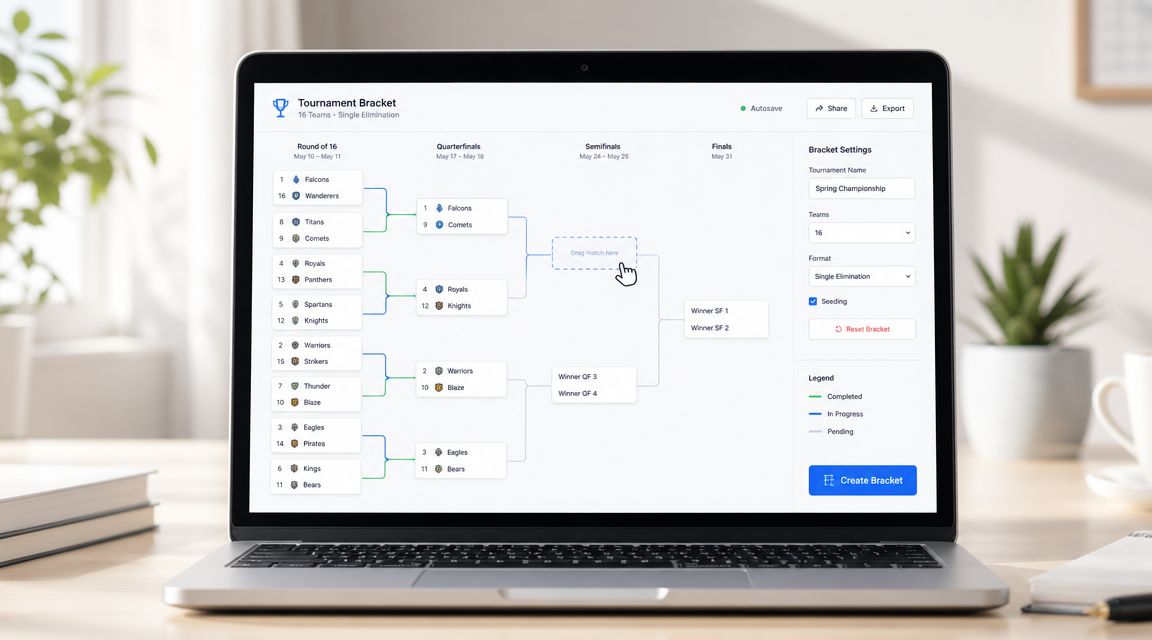
Interactive bracket generators solve a different problem. They don't replace official formats. They help you test scenarios.
That matters most before the bracket is complete. A static schedule for football playoffs tells you what is set. An interactive bracket shows what becomes possible if one result changes the whole path.
Where they add value
The best use is scenario planning. If a fan wants to know how a first-round home game could lead into a quarterfinal in Pasadena, then on to a semifinal bowl, a live bracket model makes that sequence easier to grasp than plain text.
That's especially useful in college football because the path is compact and clustered. The quarterfinals hit on Dec. 31 and Jan. 1. The semifinals followed on Jan. 8 and Jan. 9. That leaves little room for confusion if your bracket view is clean, but plenty of room for confusion if your tracker is messy.
The bracket tool isn't there to predict winners. It's there to expose how one result changes your next weekend.
Best fan scenario
Say you follow a California program, but also want to know whether the path could swing through Pasadena before the semifinal stage. A bracket generator lets you map that quickly. The same logic works for NFL playoff trees, where fans want to model who could end up advancing toward the final stop in Santa Clara.
The mistake is trusting a generator as an authority. It isn't one. Use it after you've checked the official bracket and official fixture page. Then it becomes useful, especially for content teams, group chats, and readers who want a visual route instead of a text-heavy explanation.
5. Sports Data APIs
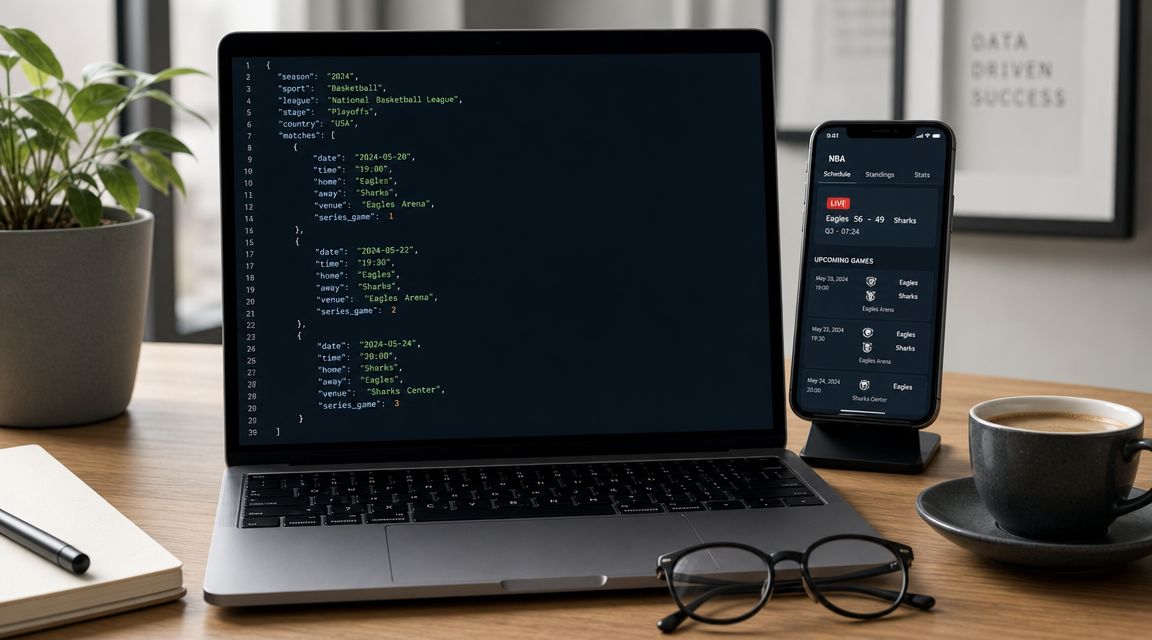
APIs matter when a simple web page isn't enough. If you want the schedule for football playoffs to update automatically across your site, app, or internal dashboard, you need a data feed.
This is less about casual browsing and more about building a system that stays current without manual edits. For publications, odds trackers, app developers, and advanced fans, that's the difference between a clean schedule hub and a page that falls out of date.
Why live data matters in January
Playoff schedules look neat on paper. Real use gets messy. Start times get published in one time zone. Readers need another. A game window runs long. One round bleeds into the next week's prep.
The NFL's 2026 important dates page is a good example of why APIs help operationally. Wild Card Weekend runs Jan. 10 to 12, Divisional Playoffs on Jan. 17 and 18, conference championships on Jan. 25, and Super Bowl LX lands on Feb. 8 at Levi's Stadium in Santa Clara. The league also states that all listed times are Eastern, which means any California-facing tracker has to convert and present those slots locally. An API-driven schedule reduces the chance of publishing the wrong local timing.
Best use case for analysts
If you're building a multi-league calendar, use the API to separate three layers:
Official event date
Local kickoff presentation
Result and progression update
That stack is stronger than a one-page manual list. It also lets you trigger alerts for overlap weekends, which is the key hidden issue in January.
A bettor's use case is simpler. APIs are helpful when you want a schedule page to refresh around lock times, especially if you plan to monitor pre-match and in-play markets without hopping between several tabs.
6. Google Sheets Schedule Templates and Spreadsheet Resources
Schedule errors usually start in the handoff. One page lists Eastern time. Another lists local kickoff. A spreadsheet gives you one controlled version of the playoff calendar and a clear audit trail for every change.
That makes Sheets useful for more than simple tracking. It works as the bridge between official bracket releases, fixture pages, and live feeds. If you are following the full 2026 playoff picture across leagues, that bridge matters.
Why spreadsheets still matter
A good spreadsheet does two jobs at once. It stores the official schedule. It also adds the context public schedule pages often skip.
January creates the problem. College and NFL playoff windows can stack on the same weekend, and the conflict is not just about start time. It affects travel, watch plans, recording priorities, and betting prep. A static fixture list rarely captures those tradeoffs well.
Sheets handles that better because every column can answer a different decision. Keep the official round name in one field. Add your local time conversion in another. Add a note for venue city, broadcast window, or likely game-end time if you are planning around back-to-back matchups.
What a useful playoff sheet should track
Skip decorative templates. Build around decisions.
Round and matchup: Keep the bracket path visible without opening a separate tab.
Official date and source time zone: This prevents conversion mistakes later.
Local kickoff time: Useful if your reference source publishes in Eastern.
Venue and travel note: Helpful for road trips, flights, or hotel timing.
Result and advancement status: Mark winners so the next round updates cleanly.
Conflict flag: Identify same-day overlaps across leagues or windows.
Last verified timestamp: Record when you checked the entry against a primary source.
One extra column improves the whole sheet. Add a source-status field such as scheduled, flexed, confirmed, or completed. That turns a basic calendar into an operating document.
Best spreadsheet setup for the 2026 playoffs
Use one master tab for all playoff games and separate support tabs for league-specific details. The master tab should answer one question fast: what is happening this weekend, in order, in my time zone?
That structure is better than splitting everything too early. Separate tabs look tidy, but they hide conflicts. A single chronological view surfaces stacked windows, short rest spots, and travel pressure immediately.
If you want deeper tracking, add simple filters for league, round, and location. That gives you three useful versions of the same data without rebuilding the schedule each time. One filter can support watch planning. Another can support travel. A third can support bracket progression checks.
Spreadsheets are manual by design. That is the tradeoff. The upside is control, especially if you want one place to verify the full playoff calendar before the next round locks.
7. Sports News Aggregation Platforms
Playoff calendars shift fast. A secondary feed can surface a change within minutes, which is why aggregation platforms belong in any serious 2026 tracking workflow.
Their value is speed and breadth. They pull headlines, scores, lineup news, and scheduling updates into one stream across leagues and time zones. That matters during overlap periods, especially when pro and college postseason windows compete for the same weekend attention. If you are tracking the full schedule for football playoffs, that single-screen view helps you catch conflicts before you rebuild your bracket or spreadsheet.
Use them as an alert layer.
The right question is simple. What changed, and which primary source should confirm it? That approach keeps aggregators in the right role. They help you spot edits. They do not settle disputes about official kickoff times, seeding, or advancement rules.
A good aggregation page is most useful for four checks:
kickoff windows that appear to have moved
bracket pairings that may have updated after a result
same-day overlap across competitions
injury, weather, or venue news that could affect timing and viewing plans
This section matters because a static fixture list is not enough for the 2026 postseason. Fans, analysts, and publishers need a monitoring stack. Official league pages define the bracket. Data feeds structure the schedule. Aggregation platforms help you notice the moments when those sources may need another look.
That is the non-obvious advantage. Aggregators are less valuable as a destination than as an early-warning system. Used that way, they shorten verification time and reduce the chance that an outdated playoff calendar stays in your workflow.
7-Item Football Playoff Schedule Comparison
A useful playoff schedule stack does two jobs at once. It shows the bracket correctly, and it updates fast enough to stay usable once results start changing the field.
The table below compares the seven source types in this guide by workload, maintenance, and the kind of decision each one supports. The pattern is clear. Official bracket pages settle format questions. Fixture pages confirm dates and windows. APIs and spreadsheets matter once you need automation, local time conversion, or scenario planning across the full 2026 football playoff calendar.
| Item | Implementation complexity | Resource requirements | Expected outcomes | Ideal use cases | Key advantages |
|---|---|---|---|---|---|
| ESPN Football Playoffs Schedule Templates | Low to Medium (embed or licensed API) | Minimal for embeds. Possible API or licensing costs | Frequently updated schedules across devices and time zones | Publishers that need ready-made fixtures, previews, and a familiar front-end | Recognizable presentation, broad schedule coverage, mobile-friendly layouts |
| Official League Playoff Bracket Formats (UEFA, Premier League, FA) | Low (download or display) to Medium (custom visuals) | Minimal for official documents. Design time for custom graphics | Rule-accurate brackets with seeding, advancement, and tiebreak structure | Format explainers, rules references, and pages that must match official competition logic | Primary-source authority, clear bracket logic, fewer interpretation errors |
| Fixture List Publication Sources (Official League Websites & Sky Sports) | Low (link or embed) to Medium (sync with broadcast listings) | Low. Some viewing details may require registration or subscription | Verified fixture lists and broadcast windows for planning and viewing | Fixture calendars, watch guides, newsroom planning | Direct-source timing, broadcaster alignment, easy public reference |
| Interactive Bracket Generators | Low (no-code embed) to Medium (customization) | Low cost for basic use. More setup for advanced customization | Editable, shareable brackets that support predictions and matchup scenarios | Reader contests, simulation pages, and scenario-based coverage | Fast setup, audience participation, easy visual updates |
| Sports Data APIs | High (developer integration required) | Developer time, subscription costs, and ongoing maintenance | Automated updates, structured schedule feeds, and scalable data workflows | Dynamic schedule pages, alerts, visualizations, and multi-competition tracking | Machine-readable data, automation support, fast update cycles |
| Google Sheets Schedule Templates and Spreadsheet Resources | Low (manual setup) | Minimal software cost. Ongoing editorial time for upkeep | Flexible planning sheets that can sort by round, date, network, or local kickoff | Small teams, editorial calendars, travel planning, and custom trackers | Full control, low cost, collaboration, easy exports |
| Sports News Aggregation Platforms | Low (reference use) to Medium (feed integration) | Minimal for browsing. Higher if used in automated workflows | Combined schedules, live results, and historical context from multiple feeds | Change detection, verification support, and broad monitoring across competitions | Fast scanning across sources, useful alerts, strong mobile access |
The tradeoff is simple. The more authority you need, the closer you stay to league and tournament sources. The more speed and flexibility you need, the more value you get from APIs, bracket tools, and spreadsheets.
That matters in 2026 because the playoff picture is not one schedule. It is a chain of dependencies. Seeding rules shape matchups. Matchups shape kickoff windows. Kickoff windows shape broadcast conflicts, travel plans, and how fans track overlapping college and pro rounds. A static fixture list cannot handle that on its own. A layered toolset can.
Your Strategy for the 2026 Playoffs
The smartest way to track the 2026 football playoff picture is to stop relying on one page.
Official league and tournament sites should always sit at the top of your stack. They publish the bracket logic and the formal fixture windows. That's where you confirm the route, the round, and the host framework. In college football, that matters because the playoff is now compact enough that one misunderstanding can throw off your whole month. In the NFL, it matters because the postseason calendar is fixed, but local presentation still needs care, especially for California readers converting Eastern-listed times and planning around the final in Santa Clara.
After that, use one schedule template or fixture publication page for readability. Official pages are authoritative, but they're not always the easiest to scan quickly on a crowded weekend. A clean schedule layout helps you spot conflicts before they hit. That's especially useful in January 2026 because college and NFL playoff windows overlap. If you follow both, you need one view that shows where your attention has to split.
The third layer should be one tool you control. That can be a bracket generator if you care about scenario planning, or a spreadsheet if you care more about travel, kickoff timing, and overlap management. For a lot of fans, the spreadsheet will be the better answer. It gives you one sheet for January and lets you flag local starts, travel notes, and high-risk weekends. That's the level where a schedule becomes actionable rather than informative.
Aggregators and APIs come after that. APIs help if you're building something automated. Aggregators help if you want a quick secondary check. Both are useful. Neither should replace the official source.
The broader takeaway is simple. Most fans think the hard part is finding the dates. It isn't. The hard part is building a system that still works once the bracket narrows, the leagues overlap, and the travel or viewing windows tighten. Set up that system now, not the night before the big game.
For more schedule breakdowns, tournament explainers, and data-led sports coverage across football, cricket, tennis, esports, and more, follow Duelbits News.